A magazine asked me to write a freeform encyclopedia entry for Arturo Bandini a while back, which I happily did; but then they changed the format on me, to something considerably more dull and straightforward, and wanted me to do my work over again. This I didn’t do, and they let it slide and never paid me. So I’m posting it here, because I thought it was rather good, just as it was.
Arturo Bandini
“Ah Camilla! When I was a kid back home in Colorado it was Smith and Parker and Jones who hurt me with their hideous names, called me Wop and Dago and Greaser, and their children hurt me, just as I hurt you tonight. They hurt me so much I could never become one of them, drove me to books, drove me within myself, drove me to runaway from that Colorado town, and sometimes, Camilla, when I see their faces I feel the hurt all over again, the old ache there, and sometimes I am glad they are here, dying in the sun, uprooted, tricked by their heartlessness, the same faces, the same set, hard mouths, faces from my home town, fulfilling the emptiness of their lives under a blazing sun.”
Ask the Dust, John Fante
Not an immigrant himself, but the child of immigrants, pugilistic, angry, often starving, a wordsmith of an underbelly Los Angeles, a chronicler of a dark side of the moon city in the thirties, passionate, purposeless, bigoted, supremely egotistical, and cut through with more self-loathing than quartz in a California schist, this is Arturo Bandini, John Fante’s magnificent creation and alter-ego in his novel Ask The Dust. He steps onto the stage like many an unlettered peasant torn between two continents. “You are a coward, Bandini,” he says of himself, “a traitor to your soul, a feeble liar before your weeping Christ. This is why you write, this is why it would be better if you died.” Openly modeled on Fante’s own younger self, Bandini is a soul in agony, driven to prove himself, too poor to be a successful drunk, too self-conscious to bed a hooker, and almost choking on his own self-regard. Much as Fante remained a writer’s writer for most of his life, valiantly obscure until he was championed by Charles Bukowski, Bandini is an outsider’s outsider, his immigrant’s rage more closely twinned to Dostoyevsky’s murderous protagonist Raskolnikov. But unlike Raskolnikov, or many of the other deadbeat literary anti-heroes that bear the mark of Bandini’s paternity, there is a wild, unstoppered energy to Arturo, a lifeforce that plunges him headlong into the world, even if it’s often a world of his own hopeless dreams and unreasonable desires. His faults are the follies of too much passion, of caring too deeply, of youth in the moment of explosion, and as much as he is a mirror to torment, he is equally a mirror to a more brilliant world, whose cracked shards shimmer ever so briefly with the grace of a life lived to its very utmost.
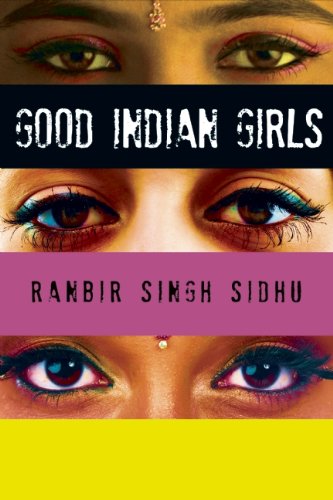
 “When I first met Ranbir Sidhu, he was a resident at the Edward F. Albee Foundation in Montauk and while there, he displayed tremendous talent and dedication. His work takes risks, is often daring and imaginative, and I appreciate the intelligence he brings to his craft. I look forward to reading his new collection of stories, GOOD INDIAN GIRLS.”




 RANBIR SIDHU